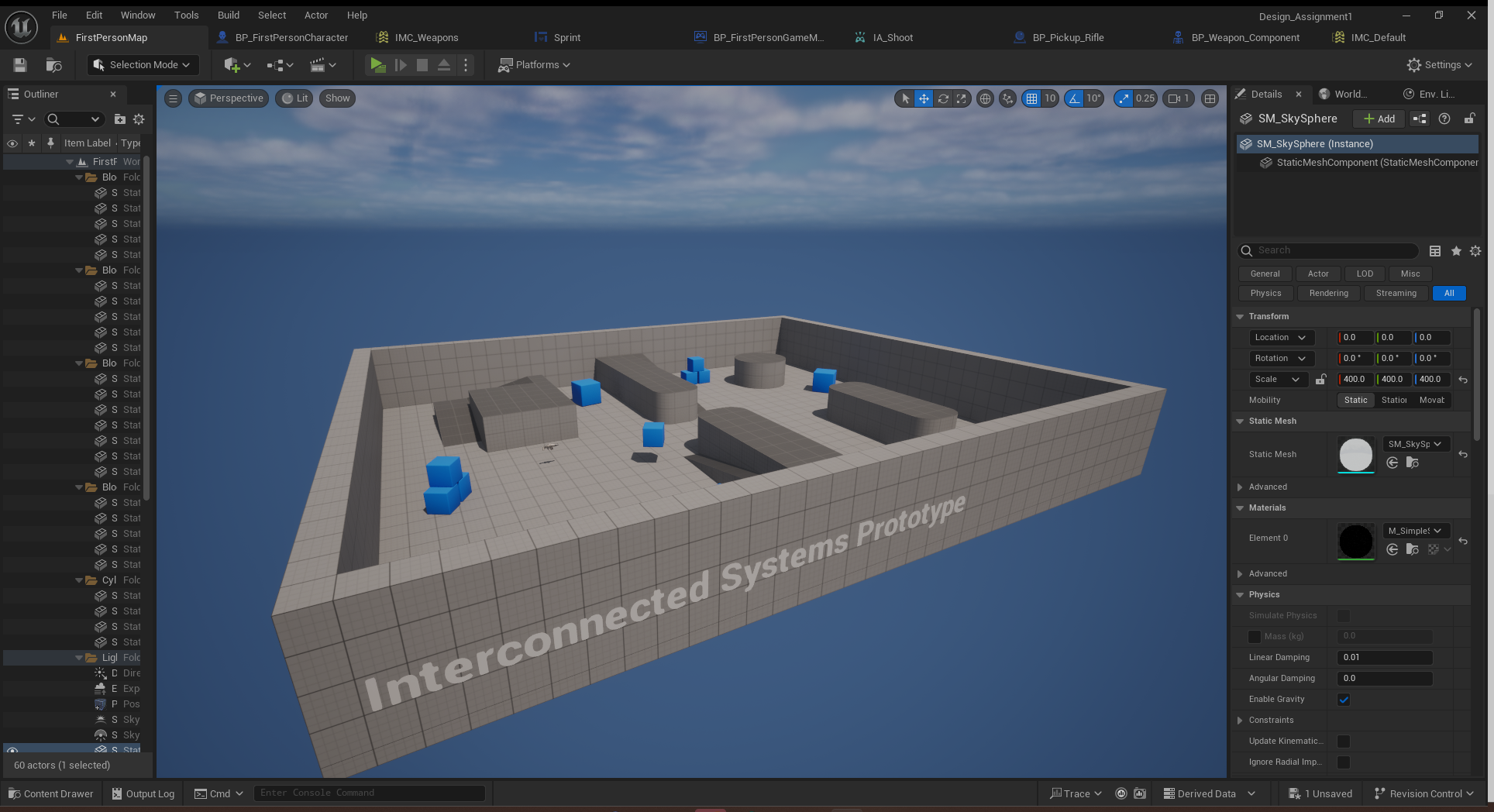
interconnected Systems Prototype
combat-stamina system
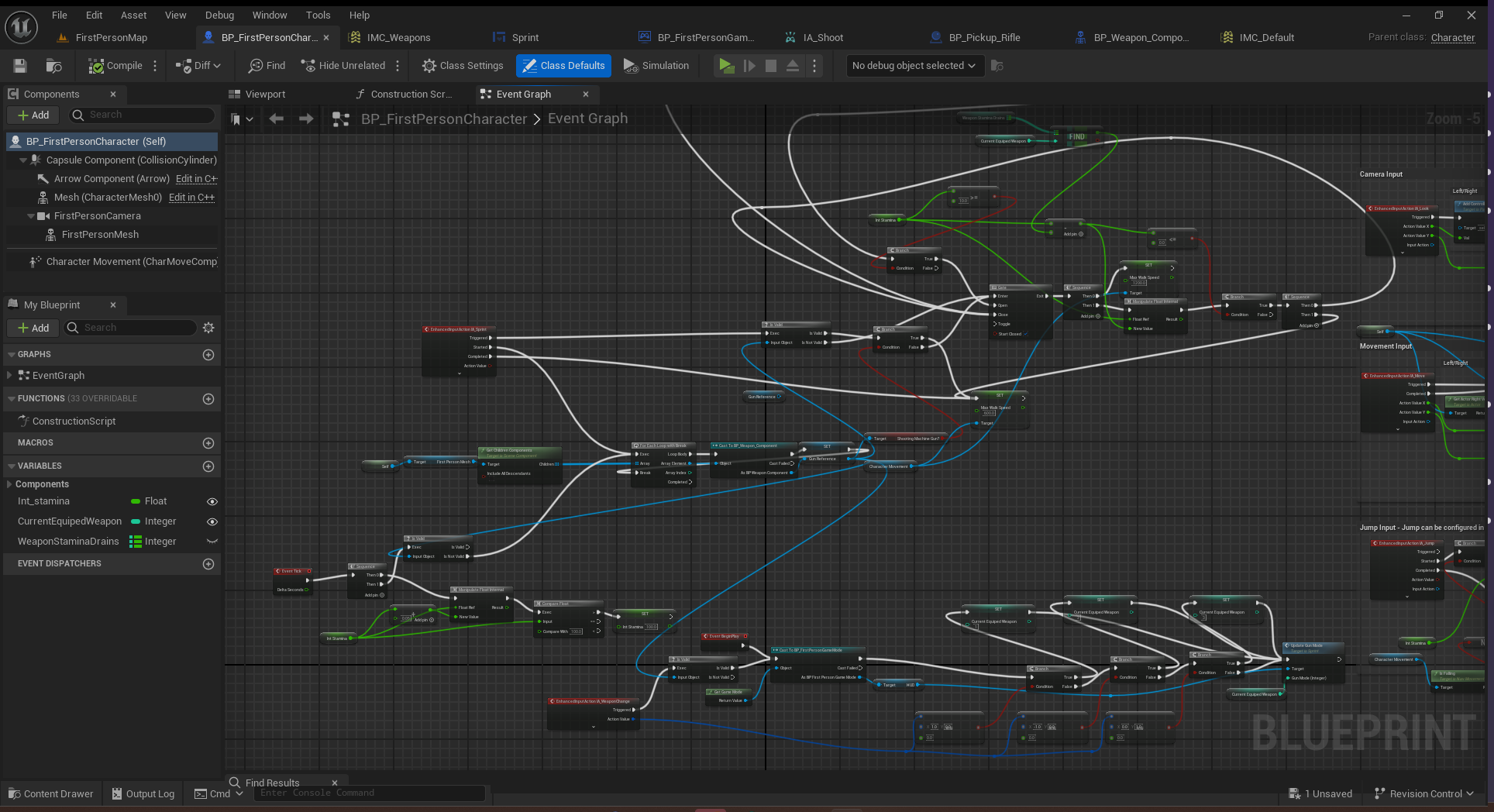
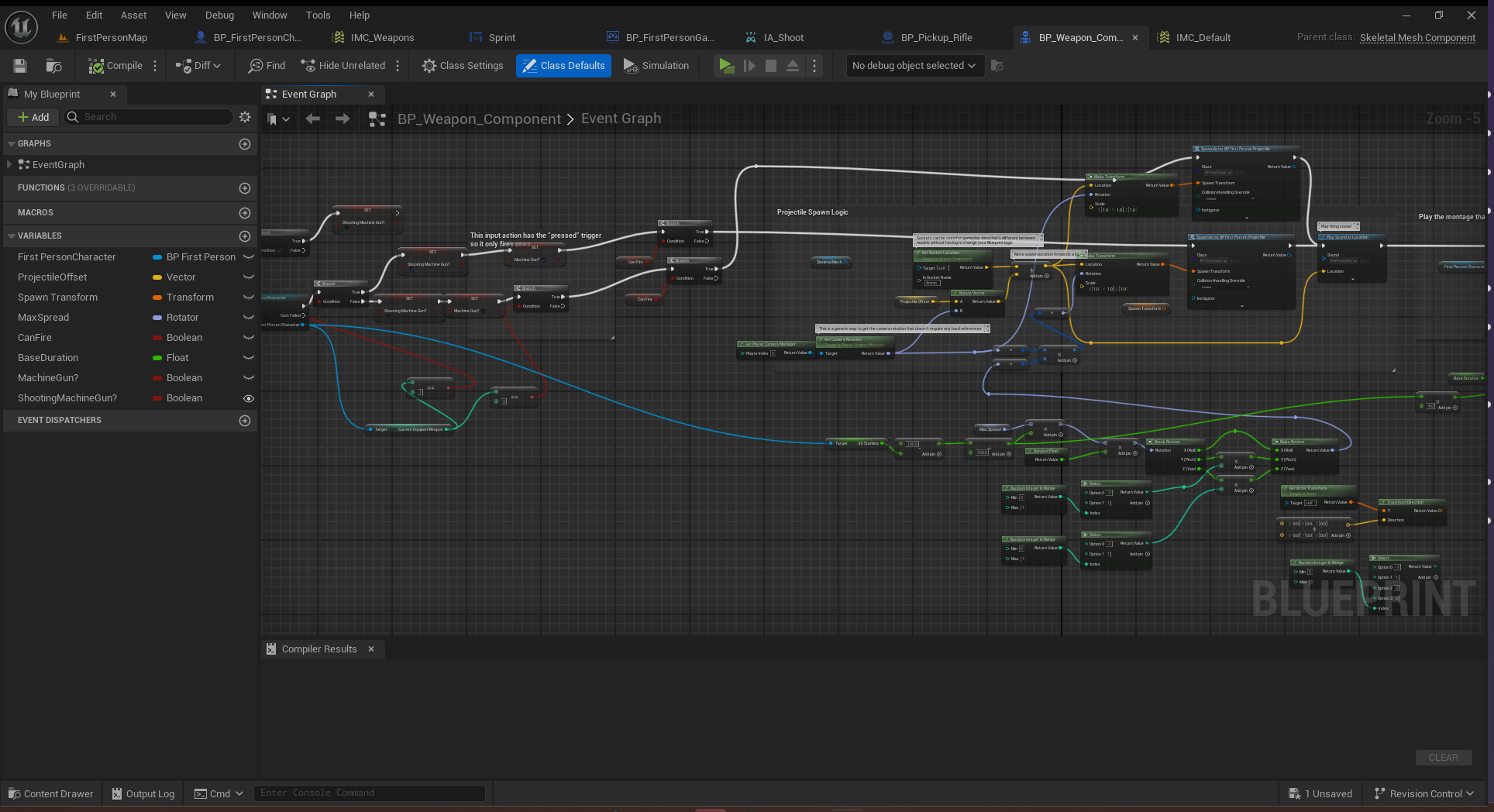
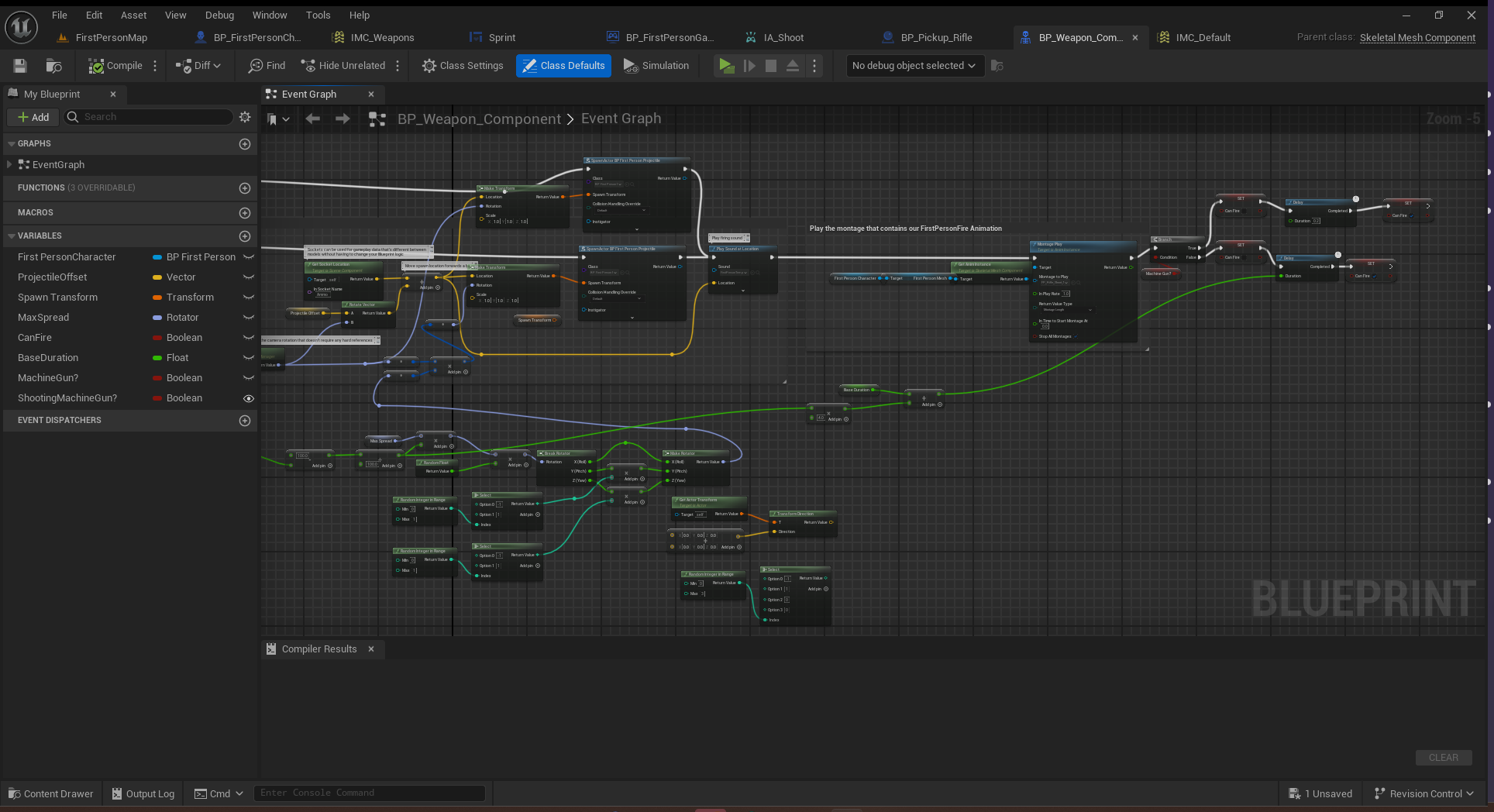
1. System Design Overview
1.1 Introduction
This report details the design, functionality, and interactivity of a game prototype built using Unreal Engine 5 (UE5). The system integrates three core gameplay systems (Movement, Combat, and Stamina) interconnected to create a dynamic, player-responsive experience. These mechanics reflect contemporary first-person game design principles and were adapted from and extended beyond UE5’s first-person template. The system was created with an iterative approach based on design logic, gameplay balancing needs, and projected player feedback.
1.2 Goals and Functionality
The core goal of the prototype is to establish a tightly interlinked system where the player’s ability to move, fight, and manage their stamina is tied together in a logical, immersive loop. Rather than treating these systems as isolated components of the game, the design places emphasis on the interdependencies of stamina, movement, and combat functionality.
Stamina System Goal: Introduce a meaningful stamina mechanic that gates high-intensity actions (running, jumping, combat efficiency) and requires players to consider pacing and tactical decisions.
Movement System Goal: Implement four-state character motion that reflects physical exertion and fatigue in real time, transitioning fluidly between idle, walking, running, and jumping.
Combat System Goal: Deliver three responsive weapon states (Machine Gun, Sniper Rifle, and Safety Mode) that exhibit performance variation based on player stamina, allowing the system to simulate stress and exhaustion under combat conditions.
These goals ensure that player agency and strategic thinking are preserved even within system constraints, reinforcing the intended gameplay loop: movement enables combat, combat drains stamina, and stamina regulates both.
2. Interconnected Game Systems
2.1 Stamina System
The stamina system serves as the prototype’s central mechanic, introducing a dynamic limitation on both movement and combat. It is governed by a state machine with the following states:
Energy 100: All movement and combat actions function at full performance.
Energy 10–99: Combat is impaired; Machine Gun spread widens and Sniper Rifle reload slows in proportion to stamina lost.
Energy 1–9: Jumping is disabled; Running still possible, unless the previous state was Energy 0, in which case Running is still being disabled. The debuffs to Combat system continue to apply.
Energy 0 (Exhausted): Jumping and Running are disabled. Combat performance is at its worst. Jumping and Running will be reenabled only after energy regenerates to 10 or above.
Transitions between these states are governed by Energy Value, which is recalculated every frame based on:
Stamina regeneration (passive)
Energy drain from actions (this leverages the dynamic interdependence of Stamina system with Movement and Combat systems: stamina drains with Jumping and Running, and the magnitude of the drain varies depending on a weapon currently equipped, with highest drain attached to the machine gun, medium to the sniper rifle, and lowest to the safety mode).
This system encourages players to manage stamina as a finite resource. Overexertion has tactical consequences, such as being unable to sprint away or fight effectively when fatigued. The system is explicitly represented in the UI, reinforcing informed player decision-making.
2.2 Movement System
The movement system is a modified version of UE5’s default first-person movement finite state machine (FSM). It uses four states:
Idle
Walking
Running
Jumping
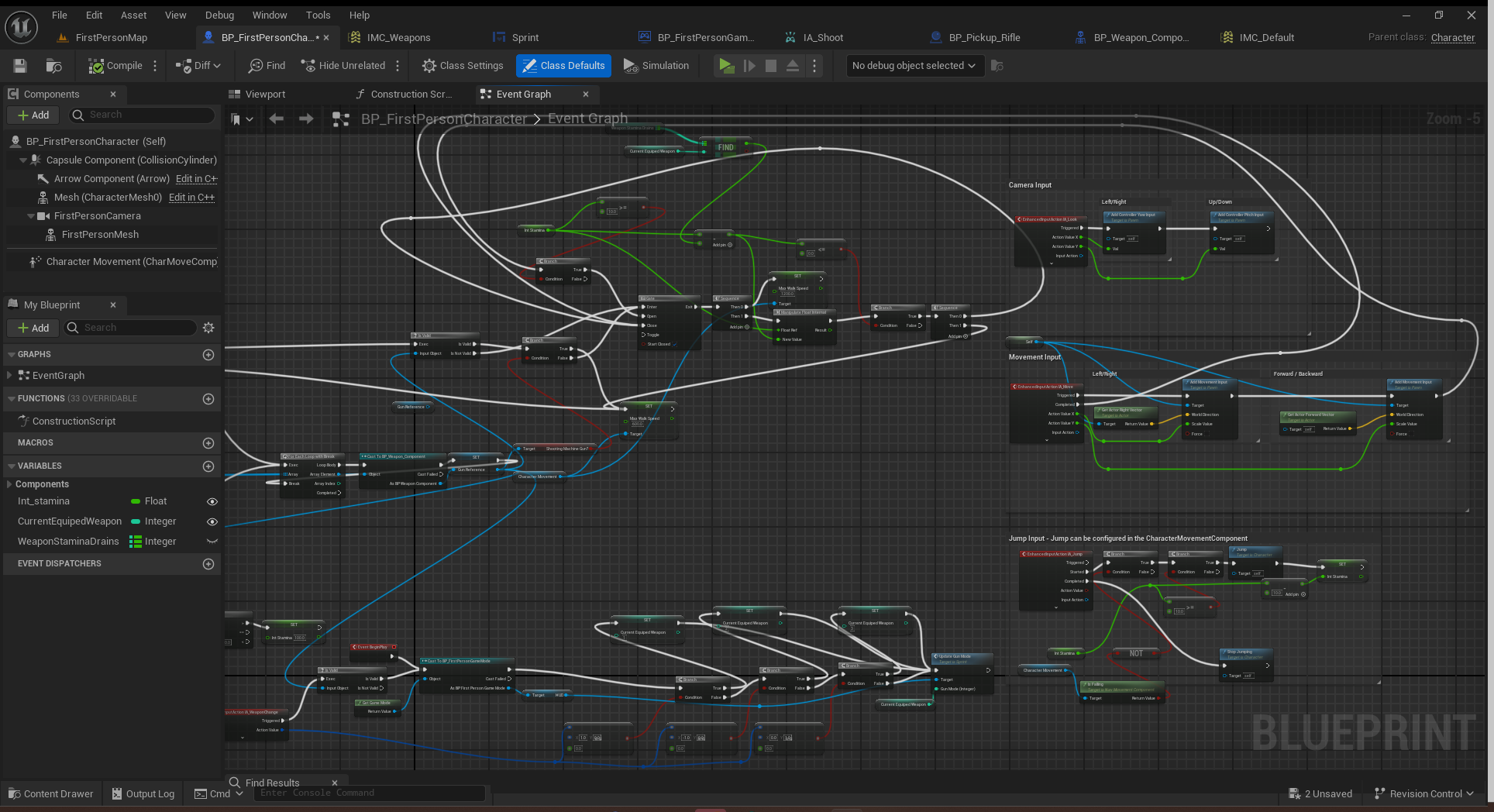
Transitions between these are triggered by standard key inputs: WASD for walking, Shift + WASD for running, and Spacebar for jumping. The FSM was extended to respond dynamically to stamina state. For example:
Running becomes disabled when stamina hits zero, only reenabled when reaching 10 stamina.
Jumping is only possible when stamina is above 10.
Transitions are responsive to stamina fluctuation on a frame-by-frame basis.
These changes create a layered gameplay experience where movement freedom is earned through stamina conservation, mimicking real-world energy depletion and recovery. This makes movement feel weighty and earned, not simply a passive traversal mechanic.
2.3 Combat System
The combat system is structured around a three-state FSM:
Machine Gun Mode (Key 1)
Sniper Rifle Mode (Key 2)
Safety Mode (Key 3)
Each weapon responds differently to stamina levels:
Machine Gun: Accuracy decreases with lower stamina due to wider bullet spread.
Sniper Rifle: Reload speed increases (becomes slower) as stamina decreases.
The Safety Mode disables firing and is presented as an "inactive" state, often used by players in non-combat phases. This allows transitions between lethal and non-lethal states and supports immersive roleplay. Its strategic use is further enhanced through the interdependence of stamina drain and weapon selection, where running with the gun set to Safety Mode incurs the lowest energy drain penalty.
A noteworthy interaction is the conditional movement-combat link: If the player is running with the machine gun and begins shooting, the character is forcibly dropped into walking state to simulate recoil control. Releasing the fire input instantly returns the player to running if the Running key remains held. This responsive linkage fosters a grounded feel where weapon handling has realistic physical consequences.
3. System Adaptation and Iteration
3.1 Player Feedback Simulation and Anticipated Changes
While formal playtesting has not yet occurred, a theoretical player feedback loop was built into the development model. Based on projected player behaviour, the following design assumptions were made:
Inexperienced players would initially deplete stamina recklessly.
Intermediate players would begin pacing themselves to maximise combat efficiency.
Advanced players would use stamina as a timing tool, planning engagements around recovery windows.
To accommodate this, stamina regeneration was tuned to reward strategic lulls in activity. For instance, if the player disengages from sprinting and combat for a short duration, they recover stamina and regain access to high-performance states. This encourages a rhythmic playstyle and tactical planning.
3.2 Challenges and Solutions
Several development challenges emerged:
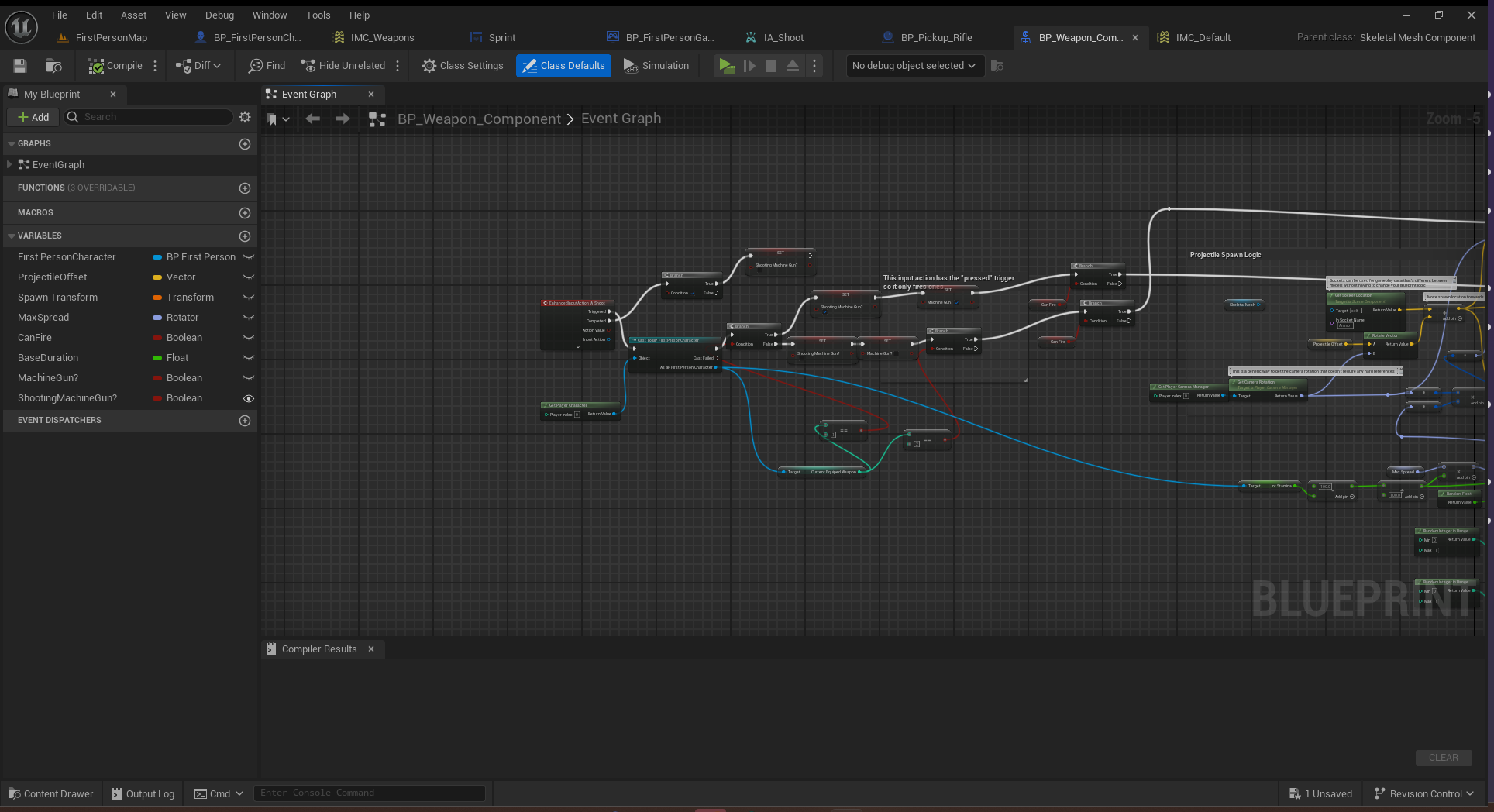
Issue: Weapon component casting errors when referencing skeletal meshes for gun models.
Solution: Weapon blueprints were reviewed for component inheritance issues and fixed through precise component referencing and validation logic via loop array of skeletal meshes.Issue: Player remained in sprint state during shooting.
Solution: Custom logic was added to force a state transition to walking upon firing, enhancing realism.Issue: Synchronisation between UI stamina meter and backend stamina value.
Solution: Created reference variables for pre-initialised values for when called upon UI tick reconstruction.Issue: System integration complexity increased as features layered atop each other.
Solution: Blueprints were modularised. Each system (movement, combat, stamina) was compartmentalised within respective blueprint components relevant to the required function.
These solutions reflect iterative and incremental system design principles where features are added progressively while maintaining system coherence.
4. System Impact and Future Expansion
4.1 Gameplay Impact
The result of this interconnected system design is a loop-based gameplay structure where the player alternates between phases of exertion and recovery. This leads to:
Emergent gameplay: Players decide when to retreat and recover vs when to commit to high-output combat.
Depth in pacing: Decision-making is not limited to what weapon to use, but when to use it effectively.
Tension curves: The threat of reaching exhaustion adds a layer of narrative tension and flow to encounters.
4.2 Future Expansion
The current prototype provides a strong foundation for additional mechanics:
Environmental impact on stamina: Terrain types or temperature could alter stamina drain/regeneration.
Enemy attacks targeting stamina directly, such as EMP-like effects that temporarily nullify stamina.
AI agents responding to player stamina (e.g., ambushing exhausted players).
The proposed systems framework is robust enough to scale with minimal rework. Introducing additional states (e.g., crouch, prone, overheat) would extend the player’s tactical toolbox without breaking current logic.
5. Conclusion
This report has described the development of an interconnected systems prototype that binds stamina, movement, and combat mechanics into a cohesive gameplay loop. Each system, developed as a state machine within Unreal Engine 5, interacts with the others to simulate real-time fatigue, tactical decision-making, and meaningful player choices. Key development challenges were overcome through blueprint modularisation and iterative design.
Future expansions are possible and easily implementable, as the current architecture supports additive design without sacrificing cohesion. Overall, this prototype demonstrates a practical application of systems design principles, effectively mapping theory to practice.